HydraFacial vs Chemical Peel: Which Treatment Is Right for You?
Two of the most popular skin treatments available today — but they work in completely different ways. Here is everything you need to know before booking.
Published Jun 28, 2026
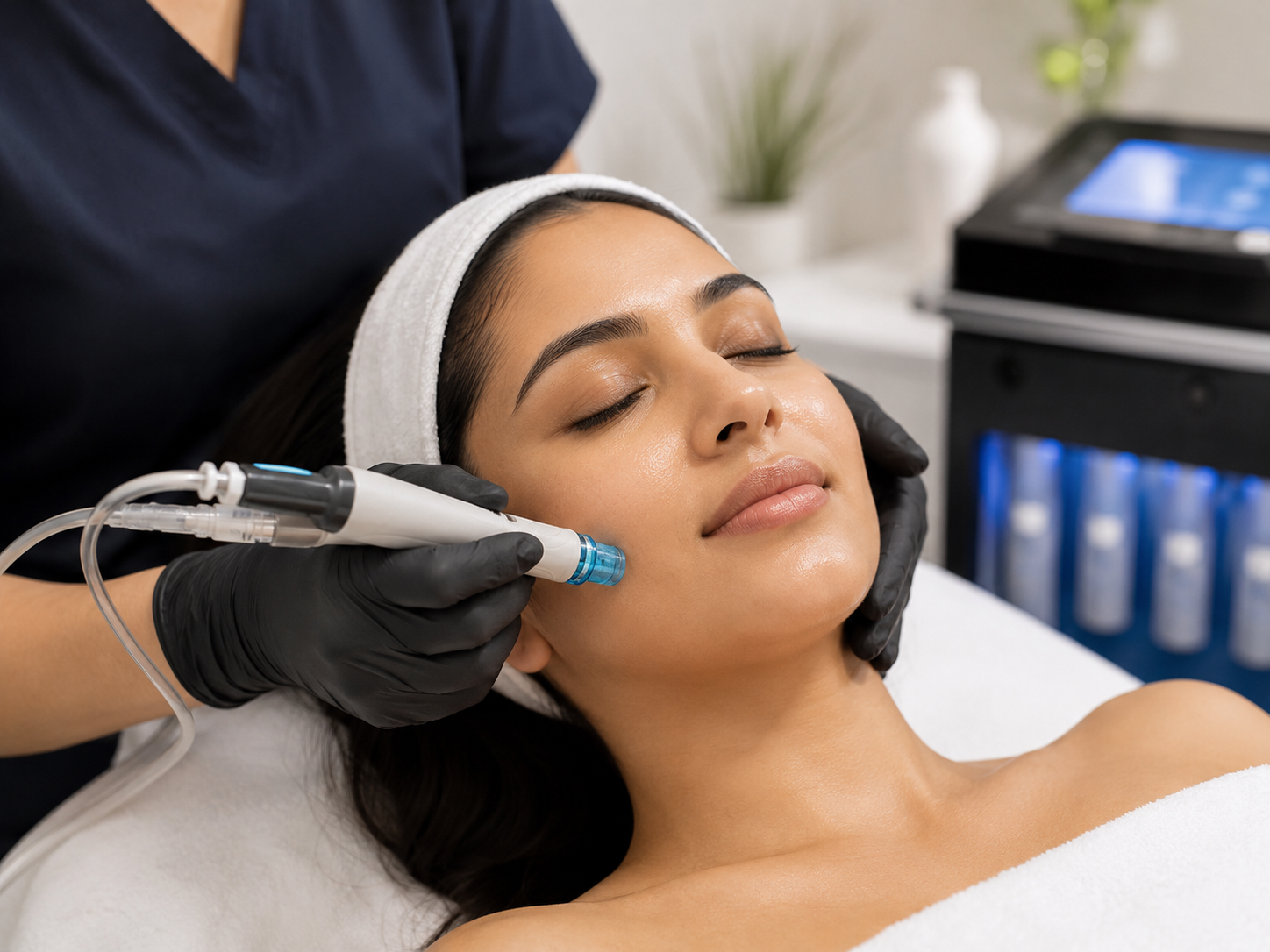
Walk into any aesthetic clinic today and you will likely be offered two standout facial treatments: HydraFacial and chemical peels. Both promise clearer, more radiant skin — but they achieve it through fundamentally different mechanisms. Choosing between them depends on your skin type, your concerns, and how much downtime you can afford. This guide breaks down everything you need to know.
What Is a HydraFacial?
HydraFacial is a multi-step, non-invasive treatment that combines cleansing, exfoliation, extraction, and hydration in a single session. Using a patented vortex technology, the device simultaneously delivers active serums — including hyaluronic acid, antioxidants, and peptides — while drawing out impurities from pores.
The result is instantly visible: plumper, brighter skin with a refined texture and reduced appearance of fine lines. Because the process involves no chemicals strong enough to cause shedding, there is zero downtime. Clients can return to their daily routine — including makeup — immediately after treatment.
What Is a Chemical Peel?
A chemical peel involves applying an acid solution — such as glycolic, salicylic, lactic, or TCA — to the skin surface. The acid breaks down the bonds between dead and damaged skin cells, triggering controlled exfoliation that reveals newer, healthier skin beneath. Peels are categorised as superficial, medium, or deep depending on the depth of penetration.
The treatment is particularly effective for uneven pigmentation, post-acne marks, and surface-level scarring. However, the exfoliation process means redness, peeling, and sun sensitivity are common in the days that follow. Darker skin tones require careful assessment to avoid hyperpigmentation risk.
Side-by-Side Comparison
| HydraFacial | Chemical Peel | |
|---|---|---|
| Downtime | None | 2–7 days |
| Suitable skin types | All skin types | Light to medium |
| Results visible | Immediately | After 1–2 weeks |
| Sessions recommended | Monthly | Every 4–6 weeks |
| Best for | Hydration & glow | Pigmentation & scars |
| Pain level | None | Mild to moderate |
| Treatment duration | 30–45 min | 30–60 min |
Which Treatment Is Right for You?
Choose a HydraFacial if you want immediate results with no recovery time — it is ideal before a special event, or as a regular monthly maintenance treatment for all skin types, including sensitive and rosacea-prone skin. If your primary concern is hydration, dullness, or congested pores, HydraFacial consistently delivers.
Opt for a chemical peel if you are tackling stubborn pigmentation, sun damage, acne scarring, or want a deeper exfoliation that progressively resurfaces over multiple sessions. A consultation with our clinicians will determine the appropriate peel strength based on your Fitzpatrick skin type and specific concerns.
The Bottom Line
Both treatments have earned their place in a well-rounded aesthetic skincare regimen — they simply serve different goals. Many of our patients alternate between the two, using HydraFacial for monthly maintenance and scheduling a chemical peel every six to eight weeks for targeted correction. The best approach is always one tailored to your skin, lifestyle, and objectives by a qualified practitioner.
Book Your Consultation Today
Take the first step towards
healthier skin and confident beauty.
